Participation of Mihai Macarie and Mihai Mladin at SIREN 2025
The event provided a valuable forum to discuss key topics such as digitalisation in energy systems, renewable integration, energy security, and investment in modern infrastructure.
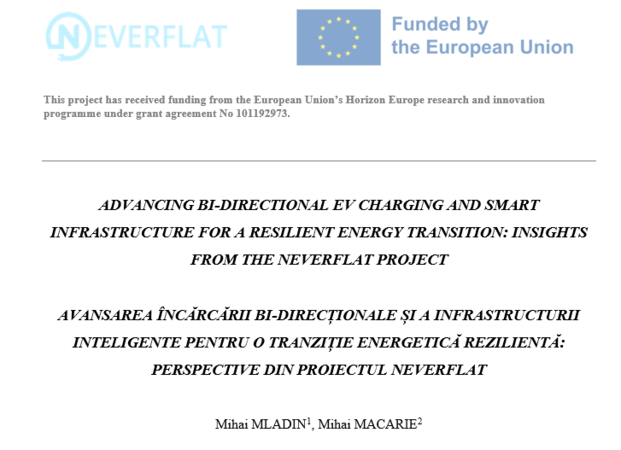
Advancing bi-directional EV charging and smart infrastructure for a resilient energy transition
We are pleased to announce that Mihai Macarie and Mihai Mladin participated in the latest edition of SIREN – Romanian Energy Symposium, one of the most important annual events dedicated to the national energy sector.
Held under the theme “A resilient and fair transition for the Romanian energy sector”, the symposium brought together a wide range of specialists, researchers, public authorities, and industry representatives. It provided a valuable platform for open dialogue on the challenges and opportunities shaping Romania’s energy future.
A key event for the national energy community
SIREN continues to play a central role in fostering collaboration and knowledge exchange across the energy ecosystem. This year’s discussions focused on several critical topics, including:
- the role of digital technologies in modern energy systems
- the integration of renewable energy sources
- energy security and system resilience
- fair transition policies for consumers, businesses, and communities
- investment opportunities and infrastructure development
The agenda featured contributions from national institutions, universities, research centres, and industry leaders, underlining the importance of coordinated action in building a sustainable and future-ready energy sector.
Presenting NEVERFLAT insights
As part of the symposium, Mihai Macarie and Mihai Mladin presented the paper:
“Advancing Bi-directional EV Charging and Smart Infrastructure for a Resilient Energy Transition: Insights from the NEVERFLAT Project”
The paper explores the key findings of the NEVERFLAT project (HORIZON-CL5-2024-D5-01-01), focusing on the technological, regulatory, market, and social barriers that currently limit the large-scale deployment of bi-directional EV charging in Europe.
At the core of the research is the concept of Vehicle-to-Grid (V2G) integration, where electric vehicles act not only as transport solutions but also as flexible energy assets that can support grid stability. The study highlights the role of:
- smart charging infrastructure and DC microgrids
- digital platforms and AI-driven energy management
- standardised communication protocols and interoperability
- market mechanisms enabling flexibility and aggregation
Drawing on the results of NEVERFLAT’s Work Package 1, the paper outlines strategic priorities and practical recommendations tailored to Romania and the wider South-East European region.
Addressing key challenges
The analysis presented at SIREN emphasised several important gaps that must be addressed to accelerate adoption:
- Regulatory barriers, including the lack of clear frameworks for V2G and flexibility markets
- Technological fragmentation, particularly in standards and interoperability
- Market limitations, restricting participation of smaller actors such as EV owners and aggregators
- Social factors, including limited awareness, trust, and user engagement
By tackling these challenges, Romania has the potential to position itself as a regional leader in smart energy and mobility innovation.
Contributing to the wider debate
Through their participation, Mihai Macarie and Mihai Mladin contributed to ongoing discussions on how Romania can achieve its energy transition goals while ensuring stability, affordability, and inclusiveness.
Their insights, grounded in practical experience and research within NEVERFLAT, reinforced the importance of aligning innovation with policy development and real-world implementation. The presentation also strengthened connections with stakeholders working across the energy and mobility sectors.
Romania’s energy landscape is undergoing a significant transformation, driven by European climate targets, technological progress, and evolving consumer expectations.
Events such as SIREN play a crucial role in guiding this transition by bringing together those who design, implement, and improve energy systems and policies.
We remain committed to supporting this process through active participation in key forums and by contributing to the development of smart, resilient, and sustainable energy solutions.